Introduction: Why Private Tutoring Changes Everything
Here’s something most language learners Private Arabic Tutor discover too late: the difference between struggling through Arabic for years and achieving fluency in months often comes down to one factor—personalized instruction.
I’ve seen it play out hundreds of times. A student spends a year in group classes, barely progressing beyond basic greetings. Then they switch to a private Arabic tutor, and within three months, they’re holding real conversations.
What changed? The teacher finally had time to understand their specific learning style, fix their individual pronunciation issues, focus on their actual goals, and move at their natural pace.
This guide is your roadmap to finding and working with the right private Arabic tutor. We’ll cover the core benefits, help you choose between different tutor types, and point you toward specialized resources for your specific needs.
Whether you’re a complete beginner or an advanced learner seeking native-level fluency, the right private tutor transforms your Arabic journey from frustrating to fulfilling.
What Makes Private Tutoring So Effective?
Private tutoring solves the fundamental problem with traditional language education: everyone learns differently, but most programs teach everyone the same way.
The Four Core Advantages
1. Personalized Attention Your tutor focuses entirely on your weak points. If you struggle with pronunciation, you’ll drill it until it’s perfect. If grammar clicks but conversation doesn’t, you’ll spend more time speaking.
2. Flexible Pacing Fast learners don’t waste time on repetition. Slower learners get patience and extra practice. Your pace becomes the pace.
3. Immediate Correction Every mistake gets caught and fixed immediately. This prevents bad habits from forming and ensures accuracy from day one.
4. Goal-Aligned Curriculum Whether you need Quranic Arabic, business communication, or travel phrases, every lesson connects directly to your actual goals.
For a deeper exploration of how tutors adapt to individual learning styles and needs, read How a Learn Arabic Tutor Helps You.
Native Arabic Tutors: Why They Make the Difference
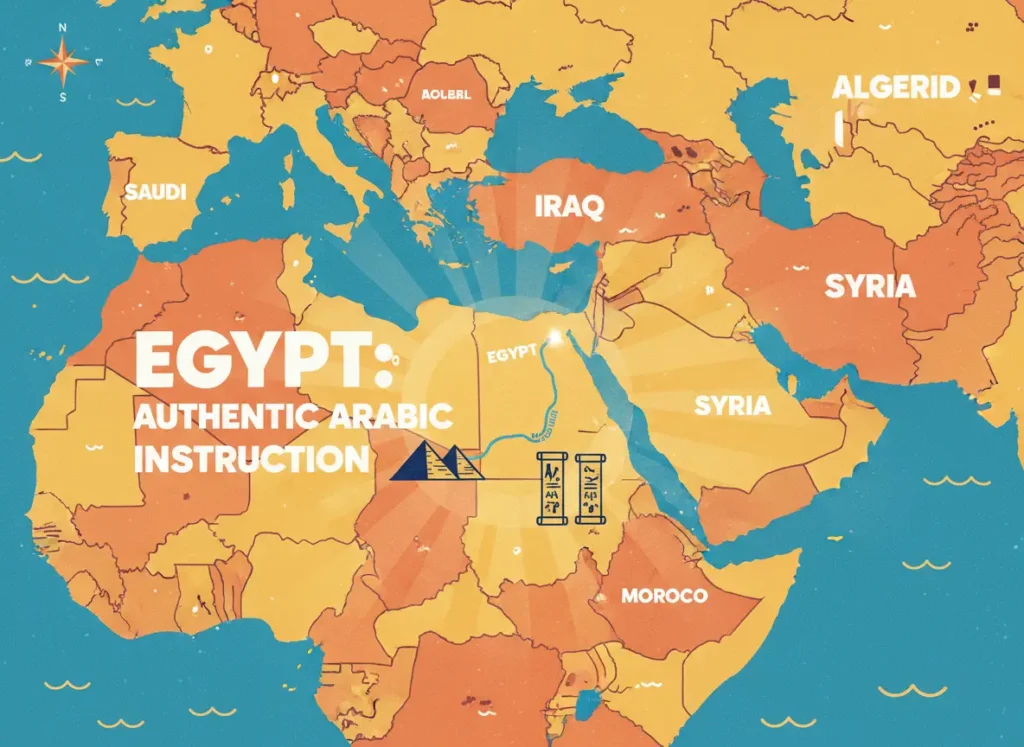
Not all Arabic teachers are created equal. The difference between learning from a textbook expert and learning from a native speaker shows in your pronunciation, cultural fluency, and natural communication style.
What Native Speakers Bring
Authentic Pronunciation: Native speakers teach you the rhythm, intonation, and flow that textbooks can’t capture. Your accent develops naturally rather than through awkward imitation.
Cultural Intelligence: Language is inseparable from culture. Native tutors teach you when to use words, how they’re used in real life, and the subtle social meanings behind expressions.
Real-World Language: You’ll learn both formal Arabic and how people actually speak in daily conversation—the shortcuts, colloquialisms, and phrases that make you sound natural.
For comprehensive guidance on learning with native instructors, explore:
- Learn Arabic With Native Speakers Online – Full benefits and approach
- Native Arabic Tutor: Mastery – Advanced native speaker advantages
Finding the Right Private Arabic Tutor: Your Decision Guide
Choosing the right tutor is crucial. Here’s a simple framework to evaluate your options.
Key Factors to Consider
Native vs. Non-Native: For most learners, native speakers deliver better pronunciation, cultural context, and natural fluency. Non-native teachers can excel at grammar explanation but often lack the authentic language instincts.
Experience Level: Look for tutors with at least 2-3 years teaching Arabic to non-native speakers. Teaching adults requires different skills than teaching children—seek tutors experienced with your age group.
Qualifications: Check for teaching certificates, Arabic language degrees, or specialized certifications. Credentials don’t guarantee quality, but they increase your odds of finding effective instruction.
Teaching Style: Some tutors are highly structured. Others are conversational and flexible. Your learning style needs to match their teaching approach. Take trial lessons with 2-3 tutors before committing.
For expert guidance on selecting quality tutors, check Best Online Arabic Tutors—it breaks down exactly what to look for and how to compare options.
Online Private Tutors: Convenience Meets Quality

Online tutoring has become the dominant choice for Arabic learners—and for good reasons.
Why Online Usually Wins
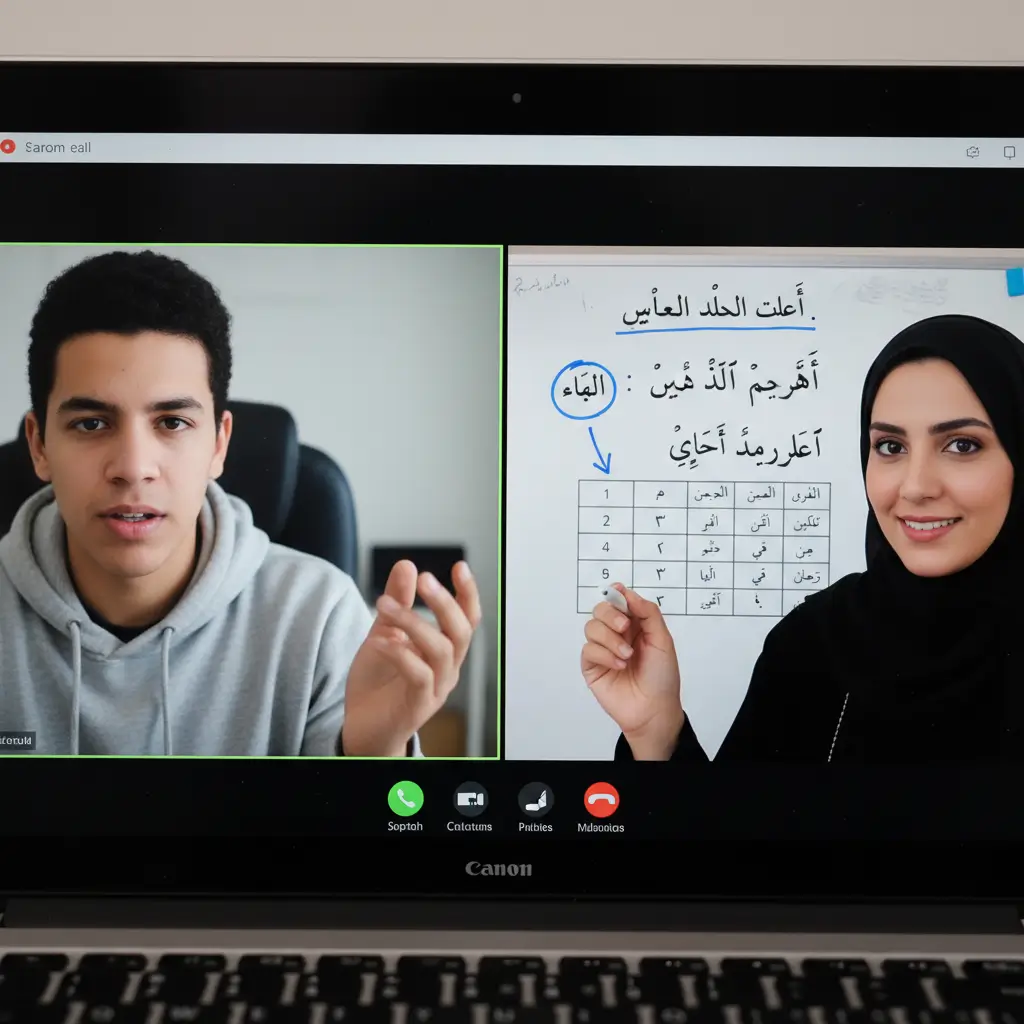
✅ Global Access: Learn from Egypt’s best tutors while sitting in London or New York ✅ No Commute: Save 1-2 hours per session ✅ Lower Cost: Typically 30-50% less than in-person ✅ Session Recording: Review lessons anytime ✅ Flexible Scheduling: Easier to fit around your life
When In-Person Makes Sense
Some learners prefer face-to-face for tactile learning needs, technology discomfort, or building local community connections. But for most people, online delivers better results at lower cost.
For a complete breakdown of why online learning accelerates progress, see Arabic Language Tutor Online Easier—it explains the psychology and practicality behind effective online instruction.
The One-on-One Advantage: Full Attention Changes Everything
Group classes dilute attention. Self-study lacks feedback. Private tutoring gives you something neither can: complete focus on your progress.
What Full Attention Delivers
No Wasted Time: Every minute moves you forward. No reviewing for absent students. No waiting for others to understand.
Instant Mistake Correction: Errors get caught immediately, preventing fossilized habits that are painful to fix later.
Customized Practice: Struggling with verb conjugations? You’ll drill them until automatic. Pronunciation perfect but vocabulary weak? More vocab building.
Accountability: Knowing your tutor expects you creates consistency. Personalized assignments get completed. Progress becomes measurable.
For deeper insights into how focused attention accelerates learning, explore Arabic Tutor Online Attention—it breaks down the cognitive science behind one-on-one effectiveness.
Cost of Private Arabic Tutoring: What to Expect
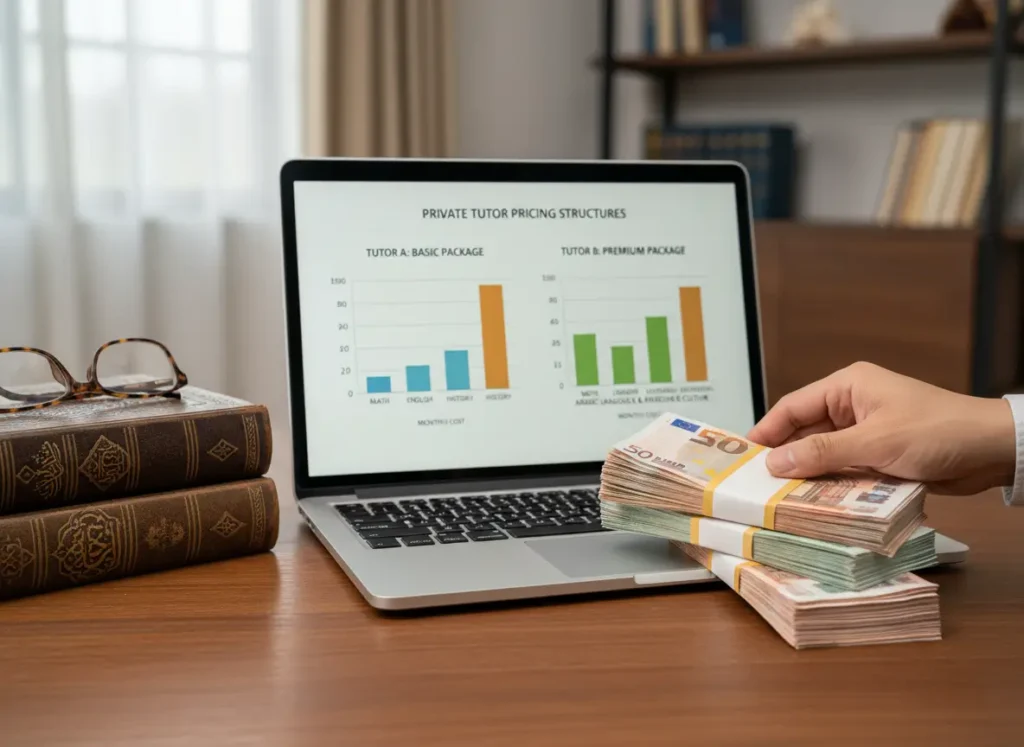
Private tutoring isn’t cheap, but it’s more accessible than many assume. Here’s the pricing landscape.
Average Rates
Budget Tier ($10-20/hour): Less experienced tutors, often non-native or from lower-cost regions
Mid-Range ($25-45/hour): Experienced native speakers with teaching certifications—the sweet spot for most learners
Premium Tier ($50-100+/hour): University professors and expert-level specialists
Is It Worth It?
Compare to alternatives:
- Group classes: $200-500/month, slower progress, 2-4 years to fluency
- Apps: $10-30/month, zero human feedback, limited speaking practice
- Private tutoring: Higher per-hour cost, but 6-12 months to conversational fluency
Time is money. Faster results mean lower total investment.
Discounts and Packages
Many tutors offer reduced rates for:
- Bulk lesson purchases (10-20 sessions)
- Monthly subscriptions
- Referral bonuses
Pro Tip: Start with individual lessons to test compatibility, then commit to packages once you find a great tutor.
What to Expect in Private Arabic Lessons
Understanding the typical session structure helps you maximize every minute.
Standard Session Flow
Warm-Up (5-10 min): Conversation review, progress discussion New Content (20-30 min): New grammar, vocabulary, or skills introduction Active Practice (20-30 min): Exercises, speaking drills, real-time application Review & Homework (5-10 min): Summary and assignment for next session
Homework Is Non-Negotiable
Good tutors assign reinforcing homework:
- Vocabulary flashcards
- Grammar exercises
- Short writing paragraphs
- Speaking recordings
- Arabic media consumption
Students who complete assignments consistently progress 2-3x faster. Homework isn’t busywork—it’s where retention happens.
Recommended Frequency
Beginners: 2-3 sessions weekly (more exposure = faster progress) Intermediate: 2 sessions weekly minimum Advanced: 1-2 sessions weekly for refinement
Session Length: 60 minutes is standard. 90 minutes works for intensive learners. Anything less than 60 minutes rarely produces meaningful progress.
Maximizing Your Private Lessons: Best Practices
You’re paying for personalized instruction. Here’s how to get maximum value.
Before Each Lesson
- Review previous session notes (10-15 minutes)
- Prepare specific questions
- Set clear goals for the session
During Each Lesson
- Speak as much as possible
- Be honest when confused
- Record sessions (if permitted) for later review
- Take notes on corrections and new concepts
Between Lessons
Daily practice is non-negotiable. Even 15-30 minutes daily produces 3-5x faster progress than lesson-only learning.
Daily Habits That Work:
- Review vocabulary (10 min)
- Read aloud (10 min)
- Record yourself speaking (5 min)
- Listen to Arabic media (15 min)
Track Your Progress
Keep a learning journal documenting:
- What you learned
- What you struggled with
- Questions for next session
- Milestones reached
This helps you see progress (which maintains motivation) and helps your tutor focus on the right areas.
Common Mistakes to Avoid
Mistake 1: Passive Learning
Letting the tutor do all the work produces minimal progress. Active engagement—speaking, asking questions, practicing—creates results.
Mistake 2: Skipping Homework
Homework is where concepts solidify. Skipping it means you’re only learning during sessions, drastically slowing progress.
Mistake 3: Switching Tutors Too Quickly
Give a tutor at least 4-6 sessions before deciding they’re not a good fit. Building rapport and understanding your learning style takes time.
Mistake 4: Unclear Goals
Vague goals produce vague results. Tell your tutor exactly what you want to achieve and by when. Clarity creates accountability.
Explore Specialized Private Arabic Tutoring Topics
Different learners have different needs. These specialized guides dive deep into specific aspects of private tutoring:
🎯 Core Topics:
Best Online Arabic Tutors Complete guide to evaluating and comparing tutors. Learn what credentials matter, how to assess teaching style, and where to find top instructors.
Learn Arabic With Native Speakers Online Why native speakers accelerate pronunciation, cultural fluency, and natural communication. Includes finding native instructors online.
Native Arabic Tutor: Mastery Advanced benefits of learning with native speakers, including accent reduction, idiomatic expressions, and cultural intelligence.
Arabic Tutor Online Attention Deep dive into how one-on-one attention accelerates learning through immediate correction, customized pacing, and focused practice.
How a Learn Arabic Tutor Helps You Detailed exploration of personalized learning, goal alignment, and how tutors adapt to individual learning styles.
Arabic Language Tutor Online Easier Why online learning often delivers better results than in-person instruction, including convenience, cost, and access to top tutors globally.
Success Stories: Real Results from Private Tutoring
Sarah’s Business Breakthrough
Sarah, 34, needed Arabic for her marketing role in Dubai. With a private tutor focusing on business vocabulary, she went from zero to conducting client meetings in Arabic within 8 months.
Her approach: 60-minute sessions twice weekly + 20 minutes daily practice.
Michael’s Quranic Journey
Michael, 52, wanted to understand the Quran in its original language. His tutor designed lessons around Quranic vocabulary and classical grammar. Within a year, he was reading with comprehension.
His method: Weekly sessions + daily Quran reading practice.
Aisha’s Confidence Transformation
Aisha, 28, felt embarrassed speaking despite years of group classes. A patient native tutor built her confidence through conversational practice. Within 4 months, her speaking anxiety disappeared.
What worked: Speaking from day one, accepting mistakes as learning.
Frequently Asked Questions
How long does it take to become fluent with a private tutor?
Most students reach conversational fluency in 6-12 months with consistent practice (2-3 sessions weekly + daily self-study). Advanced fluency takes 18-24 months. This is 2-3x faster than group classes or self-study alone.
Can I learn Arabic with just a tutor, no other resources?
Yes, but combining tutoring with self-study accelerates progress. Your tutor teaches and corrects; self-study reinforces and builds muscle memory between sessions.
What if I don’t like my tutor after a few sessions?
Switch. Chemistry matters enormously in private tutoring. Most platforms make it easy to try different tutors until you find the right personality and teaching style match.
Do I need to know any Arabic before starting with a tutor?
No. Quality tutors work effectively with complete beginners, starting with the alphabet and basic sounds, building systematically from there.
How do I know if my tutor is actually good?
Effective tutors consistently correct mistakes, adapt lessons to your pace, assign relevant homework, track your progress, and make learning engaging. If you’re not seeing measurable improvement after 4-6 weeks, reassess.
Should I learn Modern Standard Arabic or a dialect with my tutor?
Most tutors recommend MSA first for reading and grammar foundation, then adding a dialect (Egyptian, Levantine, Gulf) for conversation. Discuss your specific goals—business needs MSA; social integration benefits from dialect.
Why Choose Alphabet Arabic Academy for Private Tutoring
At Alphabet Arabic Academy, we specialize in connecting serious learners with expert native Egyptian tutors who understand adult learning.
What Sets Us Apart
✅ All Native Egyptian Speakers Every tutor is a native Arabic speaker from Egypt, bringing authentic pronunciation and deep cultural knowledge.
✅ Certified & Experienced Our instructors hold teaching certifications and have years of experience teaching Arabic to non-native adult learners specifically.
✅ Al-Azhar Trained Many of our tutors are Al-Azhar University graduates, combining traditional Islamic scholarship with modern teaching methods.
✅ Flexible Online Platform Learn from anywhere with our user-friendly video platform. Sessions are recorded for review.
✅ Goal-Specific Programs Whether you need business Arabic, Quranic studies, conversational fluency, or Modern Standard Arabic, we match you with specialists in your focus area.
✅ Proven Results Our students consistently achieve conversational fluency in 6-12 months, significantly faster than traditional methods.
Your Next Steps: Start Today
Private Arabic tutoring isn’t a luxury—it’s the most efficient path to fluency for serious learners.
How to Begin
Step 1: Define Your Goal Be specific. “I want to read Arabic news” or “I need business Arabic for Dubai” is better than “I want to learn Arabic.”
Step 2: Set Your Budget Determine your monthly investment. Remember: faster progress often costs less overall than slow progress over years.
Step 3: Book a Trial Session Experience our teaching method firsthand. Meet your potential tutor, assess chemistry, and see how personalized instruction feels.
Step 4: Commit to Consistency Once you find a good match, commit to at least 3 months of regular lessons. That’s when real progress becomes visible and momentum builds.
Step 5: Practice Daily Tutoring plants seeds. Daily practice—even just 15-30 minutes—makes them grow.
Conclusion: Your Investment in Fluency
Learning Arabic with a private tutor is one of the smartest investments you can make in yourself.
The cost is real. The commitment is significant. But the results—true fluency, cultural understanding, opened doors—are priceless.
Every conversation you’ll have in Arabic. Every text you’ll read. Every relationship you’ll build. Every opportunity that opens because you speak the language. It all starts with that first lesson with the right tutor.
At Alphabet Arabic Academy, we’ve spent years connecting learners like you with expert native tutors who understand exactly how adults master Arabic. Our tutors don’t just teach language—they build confidence, cultural intelligence, and lasting fluency.
👉 Book your free trial lesson with Alphabet Arabic Academy and experience the difference personalized instruction with a native Egyptian tutor makes.
The tutors exist. The technology works. The path is clear. What’s stopping you?
This comprehensive guide was created to help learners like you navigate the world of private Arabic tutoring with clarity and confidence. Whether you’re just starting your Arabic journey or looking to break through a plateau, the right private tutor transforms frustration into achievement.